Previous winners
2024 prize winners
Our 2024 winners are Dr Caroline Cartlidge and Rosalind Walsh. Thanks to the generous sponsorship of this competition by Sonic Healthcare UK, both winners will be awarded £500 each.
Dr Caroline Cartlidge
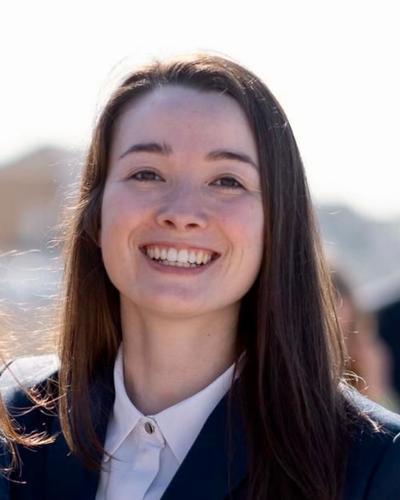
Dr Caroline Cartlidge, winner of the trainee category in the Science Communication Prize 2024.
Dr Caroline Cartlidge is a ST2 histopathology trainee based in Leeds.
Caroline has organised and led various pathology and scientific public engagement events catering for all ages. She collaborated with Thackray Medical Museum, including working with an artist and museum curators to create the exhibition, ‘Behind the Microscope’, demystifying the often-unseen work of pathologists from laboratory bench to bedside.
Caroline has also led both eye and heart dissections with the Thackray Museum team, providing direct interaction with the public and breaking down barriers between pathologists and the community. She also established a partnership with a local inner-city 6th form college to offer high-achieving young people from working-class backgrounds the opportunity to attend a pathology programme she designed (involving teams from the University of Leeds). The programme aims to help level the playing field by offering insights into medicine and pathology, enhancing professional skills, and building networks.
Caroline also engaged with members of the public about bowel cancer screening and used 3D bowel models to offer accessible explanations at the 'Be Curious' public event, which was attended by 1700 people of all ages.
Q&A with Caroline
How do you feel about winning this year’s RCPath Science Communication Prize?
I am absolutely thrilled to have been selected as the trainee winner of the 2024 RCPath Science Communication Prize! I’m incredibly grateful to the friends, colleagues and collaborators who have supported me along the way and helped make these events a success. It feels an honour to receive this recognition – thank you very much to the judges! Winning this award has given me an even greater boost to continue trying to make a positive impact through public engagement activities.
Why did you enter this year's competition?
I entered the competition after some encouragement from friends and colleagues – and I’m very glad I did! It has been highly rewarding to be part of organising fun, creative and educational events that connect with people of all ages. I hope to inspire curiosity about pathology and research while offering opportunities and encouragement to talented hardworking young people from all backgrounds to consider a future career in pathology.
What would you say to anyone who is considering entering this competition?
Go for it! This award is a fantastic opportunity to shine a spotlight on the importance of varied public engagement activities in pathology and may help inspire others to get involved and make a difference too.
Rosalind Walsh
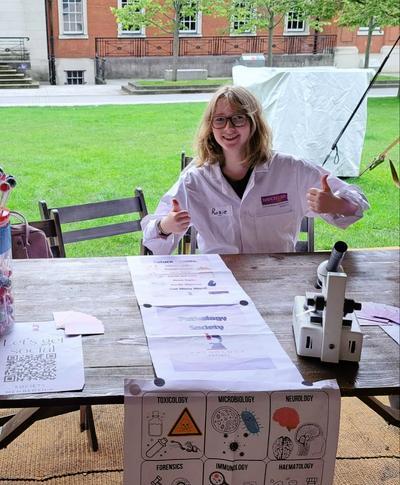
Rosalind Walsh, winner of the Undergraduate category Science Communication Prize 2024.
Rosalind Walsh is a 4th-year medical student at the University of Manchester.
Rosalind (known as Rosie for short) established a new Pathology Society at the University of Manchester in 2022, which she now chairs. The society has a following of over 300 students across multiple disciplines and an engaged and enthusiastic committee. Rosie is also the Student Representative for the Manchester Medical Society Pathology section. In these roles, Rosie has formed successful collaborations with leading professionals, professional bodies and societies to increase engagement about pathology and careers in pathology. She is also co-host of the Royal College of Pathologists' Pathology Careers Webinars and actively promotes these events on the Manchester Pathology Society's social media channels.
Rosalind's passion for pathology began at primary school and at secondary school she supported her science department with their open days, demonstrating dissections and chatting with visitors. Rosie contacted Professor Mike Osborn when he was President of the Royal College of Pathologists in 2023 and he invited her to attend her first autopsy.
Q&A with Rosalind
How do you feel about winning this year’s RCPath Science Communication Prize?
I feel very excited and honoured to have won this year's Undergraduate Award. I also feel very grateful to previous and current Manchester Pathology Society committee members for all their hard work to organise Society events and publicity over the last two years.
Why did you enter this year's competition?
I learned about this competition on your website. After reading about the achievements of previous winners, I thought my work founding and developing Manchester Pathology Society and sitting on multiple pathology committees correlated nicely with the criteria for this competition. Winning this prize will support my continued efforts to develop awareness of pathology careers at a local and national level. Prize winning publicity will also help to establish the credibility of our relatively young Society.
What would you say to anyone who is considering entering this competition?
I would say “Apply!”. Even if your pathology events/communications are local or you feel they’re low impact, many combined communications can have a significant impact – the media-multiplier effect!
2023 prize winners
Dr Zoe Rivers
Dr Zoe Rivers is a recently qualified consultant working in histopathology at the East Suffolk and North Essex NHS Foundation Trust. Since June 2022, Zoe has participated in 42 science communication events involving over 1800 school students, ranging in age from 5 to 16 years. Throughout her time as a pathology trainee, Zoe volunteered many hours to developing and delivering a range of activities aimed at inspiring young people about careers in pathology.
She created a virtual session about the journey of an appendix through a histopathology laboratory, bringing this to life for primary school children using soft toys (namely a ‘patient’ called Lenny the Lion) and clay. Zoe presented this online, interactive session 35 times between summer 2022 and summer 2023. She also delivered five hands-on in-person activities for primary school students about the skeletal, digestive and cardiovascular systems. These sessions introduced key science concepts, using plastic anatomy models and household objects to help bring the subject to life. Zoe collaborated with several primary school teachers, to ensure that the information was presented in an engaging way, at an appropriate level and to link in with the National Curriculum’s Science Programme.
Zoe is also a STEM Ambassador and through this scheme has delivered her virtual activities for school students around the UK, from remote and rural schools in Scotland to inner-city schools in London. She has recently accepted the role of ‘Enterprise Advisor’ for New Anglia Careers Hub, offering an opportunity for her to develop her science communication events for secondary school children and to inspire students to consider jobs within Pathology when thinking about their career options.
In 2019, Zoe wrote an article for the RCPath’s Bulletin about one of her teaching sessions. The article inspired colleagues to host teaching sessions for local schools. Zoe supported these colleagues by giving advice and loaning them resources for their events.
‘I am delighted to have been selected as this year’s winner in the trainee category of the RCPath Science Communication Prize. I entered the competition in the hope of showing colleagues the difference they can make to young people’s education by volunteering a few hours of their time to local schools.’ – Dr Zoe Rivers.
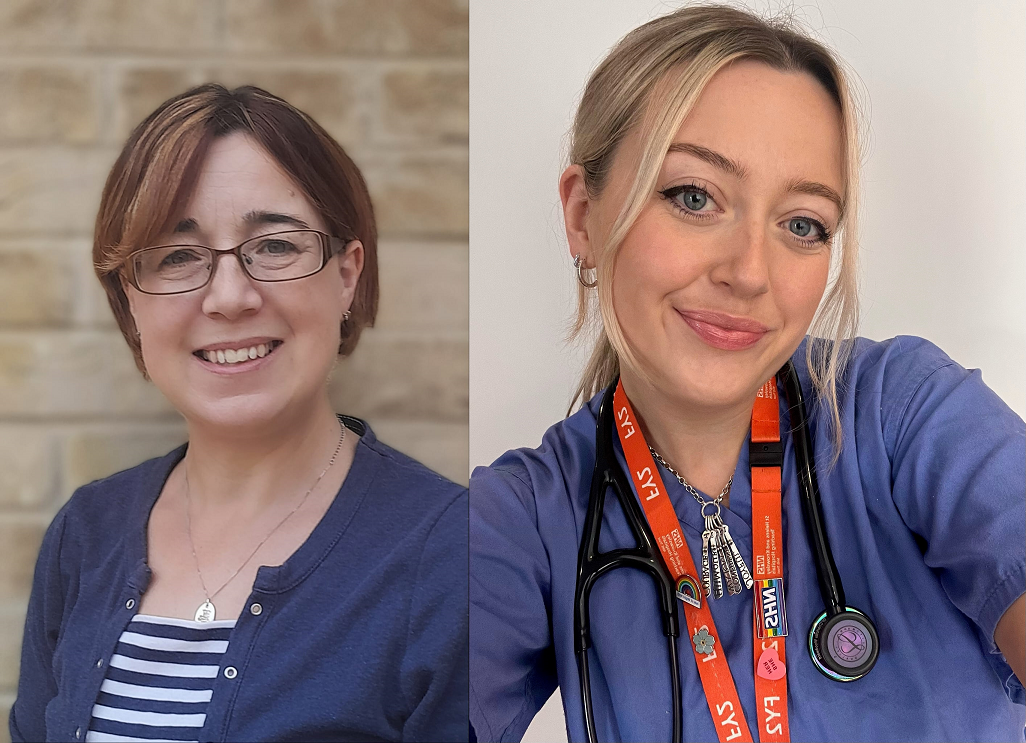
The winners of the 2023 RCPath Science Communication Prize, which is kindly sponsored by Sonic Healthcare UK: Dr Zoe Rivers (left) and Dr Charlotte Woodward (right).
Dr Charlotte Woodward
Dr Charlotte Woodward is a year 2 foundation doctor working at St Helens & Knowsley Teaching Hospital. She has used her passion for art and digital illustration to make learning neuroanatomy more accessible for public audiences, by using visually appealing images rather than traditional mainstream anatomy images.
While at medical school at the University of Southampton, Charlotte began to collaborate with Dr Scott Border who advocates for staff student partnerships within medical training and is the founder of ‘Soton Brain Hub’. This is a multi-media neuroanatomy and neuroscience teaching platform that provides free educational YouTube videos and Instagram images aimed at medical students and junior doctors.
'I think it is so important to raise awareness and celebrate the scale and diversity of work that is being done in science communication by undergraduates and trainees in the UK.' – Dr Charlotte Woodward.
Charlotte continues to cover more diverse topics on the Brain Hub including Wernicke-Korsakoff Syndrome and deep brain stimulation for Parkinson’s disease. In June 2022, Charlotte was the featured artist of the week on the American Association of Clinical Anatomists’ Twitter account, which helped to boost the global reach of ‘Soton Brain Hub’. Charlotte works in partnership with new students at the University of Southampton who provide content to accompany Charlotte’s illustrations.
Since 2020, Charlotte has juggled her work on the Soton Brain Hub with first medical school, then with her foundation training.
On being selected as the winner in the undergraduate and foundation doctor category, Charlotte said: "I was delighted to be selected as the recipient for this year’s Science Communication Prize. I think it is so important to raise awareness and celebrate the scale and diversity of work that is being done in science communication by undergraduates and trainees in the UK."
2022 prize winners
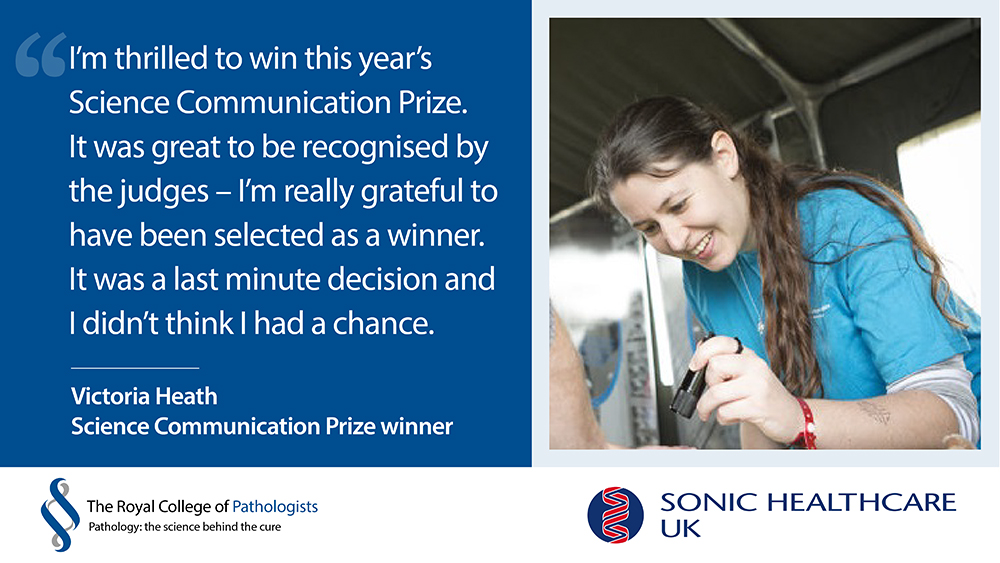
Victoria (Kip) Heath
Kip is a Deputy Trust Lead Healthcare Scientist at Great Ormond Street Hospital. During the course of the year, Kip has completed more than 100 hours of science communication. She was part of the #PathologyROAR project, where she worked with healthcare scientists from seven NHS Trusts and four professional bodies to create a series of 19 videos that raised the profile of pathology careers. These videos are now part of the Health Education England national work experience catalogue. Kip also showcased her science comedy skills at her first international comedy gig at BrightClub Ireland. She was also invited to speak at New Scientist Live in Manchester, where she highlighted pathology careers and the impact of microbiologists during a session on Antibiotic Resistance.
In addition, Kip has gained funding for science communication skills training for pathology apprentices and researchers respectively. She has promoted pathology careers to school students by giving careers talks and providing shadowing opportunities for sixth form students. Each year, she also provides mentoring and interview coaching to 15 or so graduates. You may recognise Kip from some of RCPath’s public engagement activities, namely our National Pathology Week undergraduate pub quiz which she co-hosted.
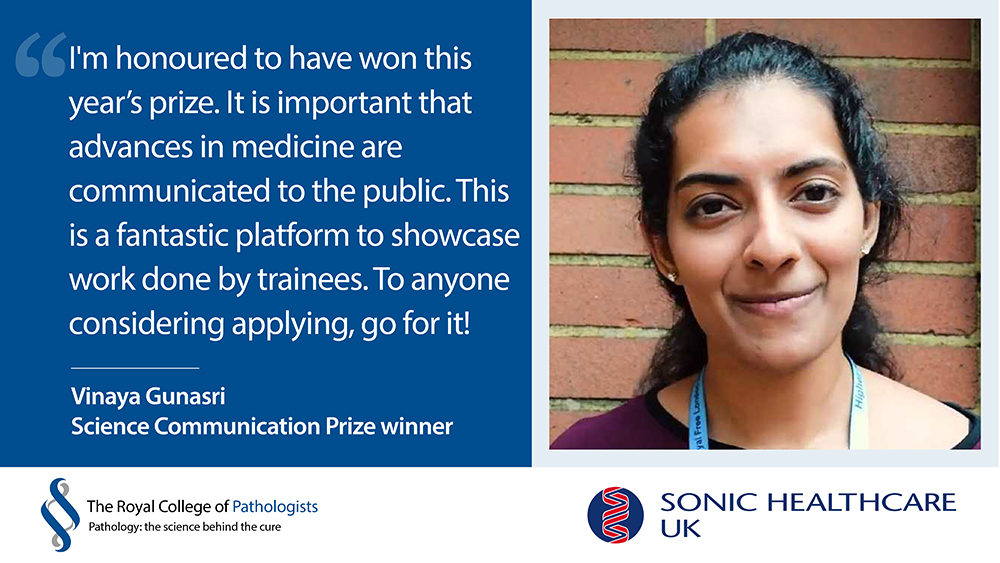
Dr Vinaya Gunasri
Vinaya is a histopathology registrar undertaking a PhD at Queen Mary University London. Vinaya’s passion for spreading pathology information to audiences of different ethnic background and languages was evident from her application. She wrote: "It is recognised in the literature that screening uptake in ethnic minorities in the UK is lower than the rest of the population, partly due to language barriers and embarrassment discussing sensitive procedures. This highlights the need for a translation project such as ours which targeted communities who may not speak English well and are hard to reach."
Vinaya led a project involving the translation of voiceovers and subtitles for videos (created by Cancer Research UK) on bowel cancer and cervical screening into Sylheti Bengali and Urdu. The videos are now available to watch on YouTube. She worked hard to publicise the videos to relevant communities and charities, as well as the Royal College of Obstetricians and Gynaecologists and the Royal College of Physicians. On World Cancer Day, Vinaya also spoke on live radio to Voice of Islam. She also wrote an invited article for Cysters, a charity working with ethnic minorities to reach target groups within their campaigns.
Dr Phillip (Pip) Nicolson
Dr Nicolson co-founded and now chairs the HaemSTAR network of UK haematology trainees. As well as enabling research studies to reach more patients, and helping numerous haematology registrars train in Principle Investigator skills, HaemSTAR has become a platform to enable young investigators with scientific ideas to realise those projects and deliver them. Furthermore, since March 2021, Pip has been treating patients with Vaccine-induced Immune Thrombocytopenia and Thrombosis (VITT) and collecting blood samples from them to use in research in order to understand its pathophysiology and natural history. His work in both of these fields has results in numerous studies and the publication of several research papers. Read on to find out more about Pip and what inspired him to apply for our Science Communication Prize.
Dr Matthew Clarke
Dr Matthew Clarke submitted a nomination for the Furness Prize at the suggestion and with the support of Dr Ali Robb (Consultant Microbiologist, Newcastle upon Tyne) who he had worked with for several years as part of the ‘Path to Success’ event and on other projects. On winning this year's prize, Matt said:
"It is a wonderful feeling to have won this year’s prize! I have been nominated on several other occasions years ago and was not successful so it is a very nice feeling and surprise! Thank you very much to the judges! Also, a huge thank you to the many friends, colleagues and teams I have worked with to enable my various projects to proceed – it could not have been done without all their input and hard work. Winning this prize will encourage me to continue pursuing my science communication projects with the general public, undergraduates and junior doctors. Having been forced to enter the virtual arena of event delivery due to COVID-19, I look forward to exploring and developing this format for other events in the future, helping to extend a wider reach to people who may be interested in knowing more about pathology and research, or who may be considering a career in the specialty."
Here are some of Matt's public engagement activities:
- A co-organiser of the RCPath/BDIAP Foundation & Undergraduate Taster Event for the past 2 years
- A founding organiser of the ‘Path to Success’ event in Newcastle since 2016
- one of four trainees (2 from the UK and 2 from the US) who authored the ‘Future of Pathology’ report and created blogs and tweets to promote the report
- A speaker for a Liverpool Medical Student Research Committee event
- Marked science projects written by college students from underprivileged backgrounds
- Interviewed Professor Sir James Underwood for the College’s video on ‘Histopathology: past, present and future’
- Facilitated the production of videos for Patient Safety Awareness Week
- Chaired the College’s virtual seminar series delivered by Professor Jo Martin called ‘The Art and Science of Practical Management’
- Published many articles in the ACP News and the College’s magazine, The Bulletin.
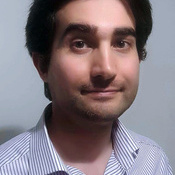
Dr Hamzah Farooq
Hamzah has been involved in a wide range of activities throughout the year, in the UK and abroad, and the judges were particularly impressed by his commitment to delivering pathology-related training to undergraduates, postgraduate trainees, healthcare workers and members of the public, including giving a talk on ‘getting into combined infection training’ and developing educational videos on whole genome sequencing.
He also delivered tutorials on virological conditions to medical students and taught the basics of microbiological and virological laboratory techniques to postgraduate trainees. In addition, Hamzah has helped to raise awareness of infectious diseases and laboratory diagnostics. He presented several posters on infectious diseases including malaria, tuberculosis and HIV and also delivered talks entitled ‘introduction to HIV resistance and clinical cases’.
Here's what Hamzah had to say when he found out he had won this year's prize: "I feel very privileged to have been awarded this prize and aim to use this motivation to continue honing my skills and deliver further science communication activities in the future. Pathology is a field in which one works with a variety of multi-disciplinary teams and a diversity of patients. Communication between teams is vital in pathology for patients, healthcare workers and for members of the public to fully understand the pathological and diagnostic process. Only by communicating effectively and working together, can we aim to reduce the burden of disease and improve the quality of life of patients and the general public."
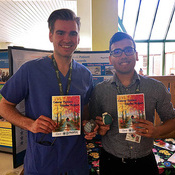
Navin Mukundu Nagesh and Bogdan Chiva Giurca
2018 was the first year that undergraduates could be awarded the Furness Prize for Science Communication, and it was also the first time two nominees were awarded the prize.
Navin and Bogdan first engaged with the Royal College of Pathologists by attending the annual Pathology Summer School run by the College in 2016. They were inspired by the public engagement session delivered by Suzy Lishman and decided to get involved in National Pathology Week (NPW). They’ve organised activities for NPW ever since, and have, to date, engaged with over 1,750 members of the public and 500 school/college students across Devon and Cornwall. Their initial event in 2016 has inspired numerous students from across the UK to get involved in organising and supporting NPW over the years. One example is a series of events organised by students at UCL, who collaborated with Navin and Bogdan to raise awareness of careers in pathology across London. They were subsequently invited to deliver the “Public Engagement” session at the Pathology Summer School in 2017 where they shared experiences and offered support to attendees.
The two students have been involved in numerous other science communication activities including “Talk Cancer” which involved working with a local cancer charity to produce a book for cancer patients, written by cancer patients with honest reflections, monologues, poems and artwork to portray the range of emotions and thoughts during a cancer journey. A story was covered by ITV news charity Fixers and a short piece was recently aired. These are only a few examples of the huge range of high quality science communication projects and events these two inspiring students have developed and supported.
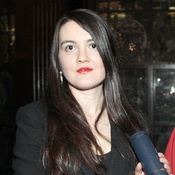
Michelle Muscat
Not only was Dr Muscat in the final stages of a PhD that had a strong focus on the communication of pathology, but she had also published a novel where the main character was a Chemical Pathologist. Michelle developed and delivered numerous school workshops that explored a range of chemical pathology topics including blood tests, high cholesterol and diabetes.
Dr Muscat has also created teaching resources, writing a number of scientific publications on the best methods to communicate and teach pathology. Her very creative approach also enabled her to reach diverse audiences through poetry, theatre and social media. Overall, Michelle impressed the judges both with the quantity and quality of the science communication work she undertook.
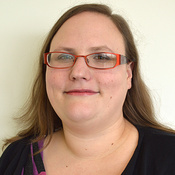
Dr Elaine Cloutman-Green
I’ve been involved in science communication for almost ten years as part of my role as a healthcare scientist. It's always felt particularly important for me, as I work in a paediatric hospital, to communicate with my patients and members of the public about science and healthcare. I have been fortunate enough to run activities with individuals from all ages and backgrounds and to be inspired by their enthusiasm.
When it was suggested to me that I should nominate myself for the Furness Prize I was initially reticent, as I was nominating myself. I’m so glad that I did however as it has allowed me to talk about how important it is to be able to communicate science to patients and the public, as well as something I have found to be immensely personally rewarding.
Dr Jacqueline McDermott
"My colleague suggested that I apply for the Furness Prize for Science Communication. I was a bit unwilling because I have never won a prize before so imagine how delighted I was to be the 2014 recipient! I know that public engagement is very important to the College so I consider it to be a great achievement that they thought my work at Centre of the Cell and with Fruit Fly Collective was outstanding and important. Winning this prize has given me even more motivation to carry on encouraging young people to get into science and to help improve communication within families affected by cancer."
Katy Heaney
"I was delighted to be nominated for The Furness Prize to celebrate a year of great success for Lab Tests Online-UK and in recognition of public engagement work I have done since beginning my NHS career. Since winning the prize, I have recruited 3 members to the promotional and marketing team at Lab Tests Online-UK and recently attended the National Association for Patient Participation conference to speak directly to Patient Participation Group representatives about how we can support their GP practices. I am really excited to be planning our 10 year anniversary celebrations in October and look forward to being part of National Pathology Week and working with the college team."
Helen Turner
Dr Vanessa Wong
Dr Chris Smith